
Solna Sweden
A future vision of what this garage could look like
if used as an urban farm.
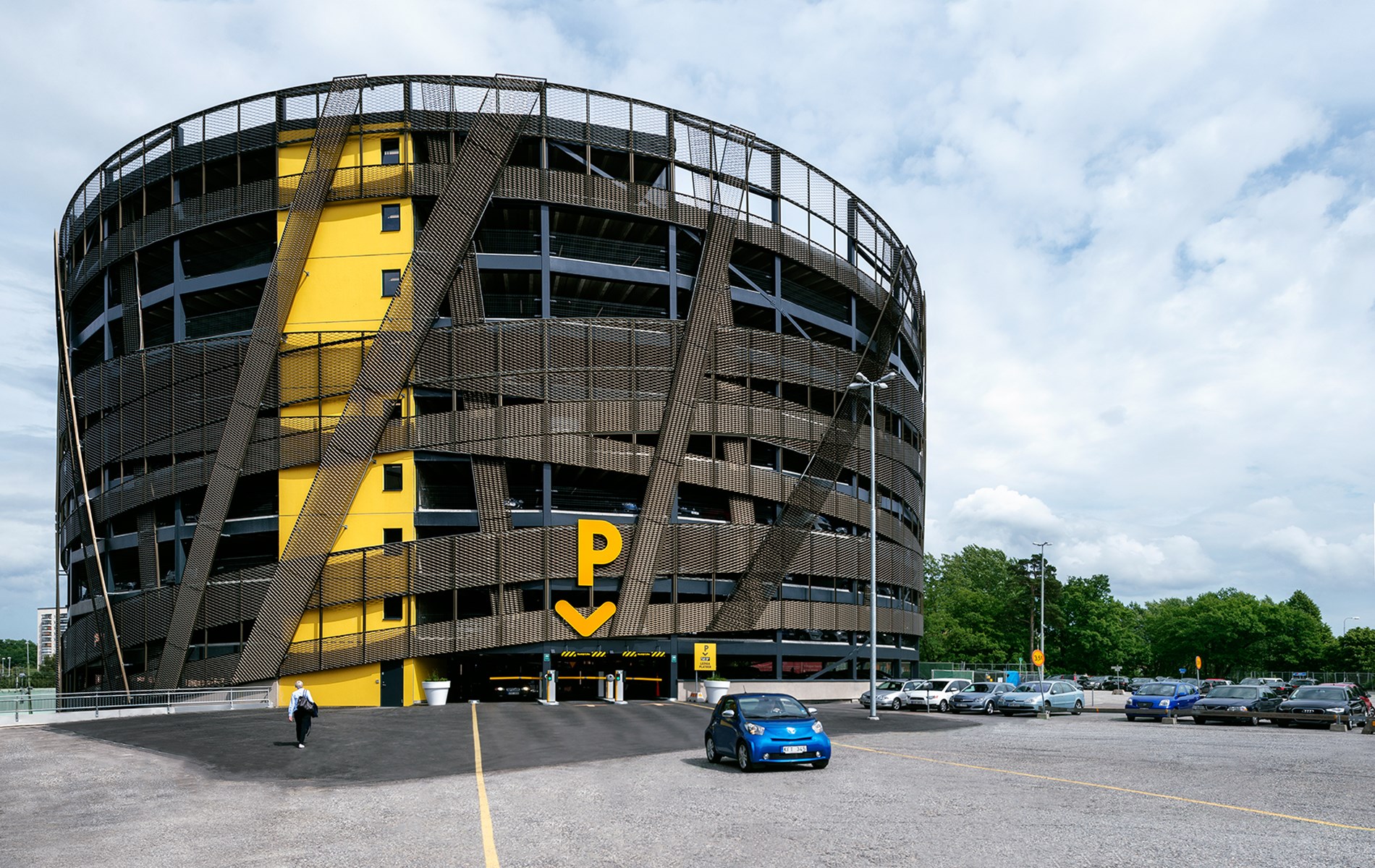
Address:
Röntgenvägen 9, 171 54, Solna
Garage size:
25 850 m²
Floor size:
2350 m²
Floors:
11
Functional analysis
These functional analyses map the urban context surrounding each TURF study site, highlighting land use, nearby services, mobility patterns, and opportunities for adaptive reuse.
SWOT Analysis
This SWOT analysis captures Solna’s evolving role as a modern urban district and the
importance of balancing growth with sustainability and liveability.
Strengths
Proximity to Central Stockholm:
Solna benefits from excellent connectivity to central Stockholm via commuter trains,
buses, and the metro, making it attractive for both businesses and residents.
Strong Business Presence:
Home to major companies and institutions like Karolinska Institute and Mall of
Scandinavia, Solna is a hub of economic activity and innovation.
Modern Urban Infrastructure:
Recent developments have brought high-quality housing, shopping centers, and office
spaces, supporting a contemporary urban lifestyle.
Weaknesses
Limited Public Green Space in Dense Areas:
Despite adjacent natural areas (e.g., Hagaparken), certain parts of Solna, particularly in
denser commercial zones, lack accessible and integrated green spaces.
Traffic Congestion:
Main thoroughfares and access points experience significant congestion, especially
during peak hours.
High Property Prices and Gentrification Pressure:
Rising real estate costs may reduce affordability and increase social inequality in
housing access.
Opportunities
Urban Green Integration Projects:
Enhancing pocket parks, green roofs, and green corridors can improve environmental
quality and livability in built-up areas.
Sustainable Transport Development:
Further investment in bike lanes, electric public transport, and pedestrian-friendly zones
can support low-emission urban mobility.
Cultural and Event-Based Development:
With its proximity to Friends Arena and major institutions, Solna can leverage
Threats
Overdevelopment Risks:
Rapid urban expansion may place pressure on infrastructure and reduce green and
public space if not carefully managed.
Environmental Strain from Traffic and Development:
Increasing traffic and ongoing construction could worsen air and noise pollution levels.
Regulatory and Zoning Challenges:
Balancing historical preservation, ecological protection (e.g., areas near Royal National
City Park), and urban development can complicate planning processes.
Scenario documents
These scenario documents present early design explorations for integrating modular hydroponic and aquaponic systems into existing buildings. Download each to see layouts, visualisations, and program concepts.